

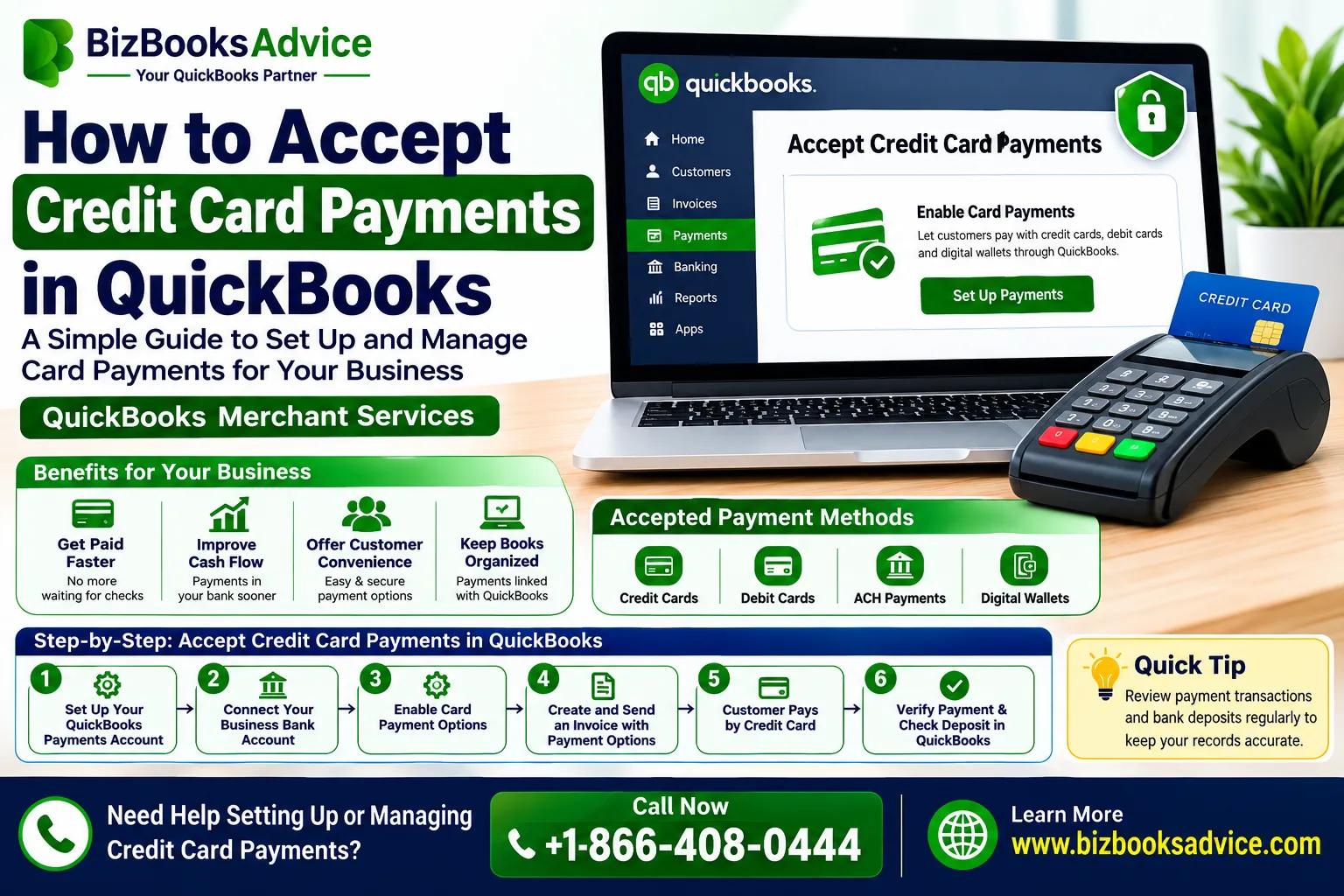
Accepting credit card payments can make it easier for small businesses to collect money, get invoices paid, and keep customer transactions organized. With compatible QuickBooks payment features, businesses can offer customers convenient ways to pay while connecting payment activity with their accounting workflow.
If you're wondering how to Accept Credit Card Payments in QuickBooks, the process generally involves setting up an eligible payment account, configuring payment options, sending an invoice or processing an in-person transaction, and then reviewing the payment and deposit records.
Need help setting up or managing credit card payments? Call +1-866-408-0444 for assistance with QuickBooks payment configuration and troubleshooting.
Can You Accept Credit Card Payments in QuickBooks?
Yes. Eligible businesses can accept credit and debit card payments through QuickBooks Payments and compatible QuickBooks products.
Depending on your QuickBooks product and account, customers may be able to pay through:
Online invoices
Payment links or requests
In-person card transactions
Credit cards
Debit cards
Supported digital wallets
Available features and payment methods can vary, so businesses should review the options available within their specific QuickBooks account.
How to Accept Credit Card Payments in QuickBooks
The exact screens may differ depending on your QuickBooks version, but the overall process is similar.
Step 1: Set Up Your Payment Account
Before accepting customer card payments, you need an eligible QuickBooks Payments account.
During setup, you may be asked to provide:
Business information
Contact information
Bank-account details
Tax information
Owner or authorized-user information
Make sure the information is accurate to avoid unnecessary verification or deposit problems.
Step 2: Connect Your Bank Account
Your payment account needs an appropriate bank account for deposits.
Review the:
Bank name
Account number
Routing information
Account ownership
If your business has multiple bank accounts, select the account that should receive customer payment deposits.
Step 3: Configure Credit Card Payment Options
Once your payment account is active, review the payment options available in QuickBooks.
Depending on your setup, you may be able to allow customers to pay by card through eligible invoices or process cards in person.
Check your payment settings before sending invoices to customers.
Step 4: Create a Customer Invoice
If you're accepting credit card payments through invoices, create an invoice for the customer.
Include accurate:
Customer name
Products or services
Amount
Invoice date
Due date
Payment terms
Double-check the information before sending the invoice.
Step 5: Enable Credit Card Payments
Review the payment options associated with the invoice.
If credit card payments are available for your account, make sure the appropriate option is enabled.
This allows eligible customers to use their cards when paying the invoice.
Step 6: Send the Invoice
Send the completed invoice to your customer.
The customer can review the invoice and use an available payment option.
The payment experience may vary depending on the QuickBooks product and account configuration.
Step 7: Customer Pays by Credit Card
The customer enters the required card information and submits the payment.
The transaction then goes through the applicable payment-processing process.
The payment can be:
Approved
Declined
Pending
Refunded later
Always review the transaction status before considering an invoice completely settled.
Step 8: Verify the Payment in QuickBooks
After the customer submits a payment, check QuickBooks to confirm the transaction.
Verify that:
The correct customer is listed.
The correct invoice is associated with the payment.
The payment amount is accurate.
The transaction status is correct.
This helps prevent duplicate entries and customer-balance problems.
Step 9: Check the Bank Deposit
Once funds are deposited, compare the deposit with the payment record.
The deposited amount may differ from the customer's original payment because of applicable processing fees or other adjustments.
For example:
Customer payment: $1,000 Illustrative processing fee: $29.90 Illustrative net amount: $970.10
This example uses a hypothetical 2.99% rate purely to demonstrate the calculation. Your actual rate depends on the applicable QuickBooks Payments pricing and transaction type.
Accept Credit Card Payments in QuickBooks for In-Person Sales
Businesses don't necessarily have to rely only on online invoices.
Eligible businesses may also process payments in person using supported payment equipment and methods.
This can be useful for:
Retail stores
Contractors
Restaurants
Repair businesses
Salons
Local service providers
Event vendors
A typical in-person workflow is:
Customer presents card → Transaction is processed → Payment is approved → Transaction is recorded → Funds are deposited
In-person processing can have different pricing from online or manually keyed transactions, so review your applicable account terms.
QuickBooks Credit Card Processing Fees
Before accepting card payments, understand how processing fees work.
The applicable cost can depend on:
Transaction type
Online versus in-person payment
Keyed-in card transactions
Pricing plan
Payment method
Account-specific terms
Optional payment services
There isn't necessarily one rate for every credit card transaction.
For that reason, businesses should review their current QuickBooks Payments pricing and their own processing statements.
Why Accept Credit Card Payments in QuickBooks?
Offering card payments can provide several advantages.
Convenient Customer Experience
Customers can pay electronically rather than relying on checks or cash.
Faster Invoice Collection
Electronic payment options can make it easier for customers to pay invoices.
Better Payment Tracking
Connecting payments with invoices can simplify customer-account management.
Less Manual Data Entry
An integrated payment workflow can reduce repetitive bookkeeping tasks.
Improved Cash-Flow Visibility
Businesses can monitor customer payments and outstanding invoices more efficiently.
QuickBooks Merchant Services for Credit Card Payments
Businesses evaluating QuickBooks Merchant Services should consider how payment processing fits into their overall accounting workflow.
Before choosing your configuration, consider:
How customers prefer to pay
Whether you accept online payments
Whether you accept payments in person
Your monthly transaction volume
Processing costs
Deposit timing
Invoice workflow
Reconciliation procedures
The right setup should fit your actual business operations rather than simply focusing on a single processing rate.
What If a Customer's Credit Card Is Declined?
A declined card doesn't automatically mean there's a QuickBooks problem.
Possible causes include:
Incorrect card information
Expired card
Insufficient available funds
Bank restrictions
Security checks
Payment-method limitations
Temporary processing problems
Ask the customer to verify their payment information or contact their card issuer when appropriate.
You can also offer another available payment method.
What If the Customer Says They Paid but QuickBooks Doesn't Show It?
Start by checking the payment status.
Look for:
Pending transactions
Completed payments
Declined payments
Refunded payments
Duplicate transactions
Also check the customer's invoice.
Avoid manually recording another payment until you've confirmed whether the original transaction exists. Otherwise, you could create a duplicate payment.
What If the Payment Is Recorded but the Deposit Is Missing?
If the payment appears in QuickBooks but hasn't appeared in your bank account, check the deposit status and expected timing.
Possible explanations include:
Normal processing time
Bank-processing delays
Deposit schedule
Weekend or holiday timing
Account-related issues
If the expected deposit period has passed, review the transaction details and account information.
How to Record Credit Card Processing Fees
Processing fees should be handled consistently in your accounting records.
If your deposit is less than the customer payment, compare the payment amount with the processing fee and net deposit.
For example:
Invoice: $2,500 Customer payment: $2,500 Processing fee: $74.75 Net deposit: $2,425.25
The accounting treatment should reflect your business's bookkeeping method and chart of accounts.
If you're uncertain about how to categorize payment-processing fees, consult your accountant or bookkeeper.
Common Problems When Accepting Credit Cards in QuickBooks
Credit Card Payment Option Isn't Available
Review whether your payment account is active and whether card payments are enabled for the applicable invoice or transaction.
Customer Cannot Pay the Invoice
Check the invoice details and available payment options.
Payment Is Stuck as Pending
Review the transaction status and allow the applicable processing period before taking further action.
Duplicate Payment Appears
Compare the customer invoice and payment history before making a correction.
Bank Deposit Doesn't Match
Check processing fees, refunds, adjustments, and deposit timing.
Payment Processing Stops Working
Check your account status, internet connection, payment settings, and any displayed error message.
If you're having trouble with QuickBooks credit card processing, call +1-866-408-0444 for assistance.
Best Practices for Accepting Credit Card Payments
Keep Invoices Accurate
Incorrect customer or invoice information can create payment and reconciliation problems.
Review Payments Regularly
Don't wait until the end of the month to discover missing or duplicate transactions.
Reconcile Deposits
Compare QuickBooks payment records with your actual bank activity.
Understand Your Fees
Know how processing charges affect the amount deposited into your bank account.
Protect Account Credentials
Use strong passwords and appropriate security features when managing payment accounts.
Test Your Payment Workflow
Before sending payment-enabled invoices to many customers, test the process.
QuickBooks Credit Card Payment Checklist
Before accepting customer card payments, verify:
Payment account is active
Business information is accurate
Bank account is connected
Credit card payment option is available
Invoice settings are configured
Customer information is correct
Processing fees are understood
Payment workflow has been tested
Deposits are being received correctly
Transactions are reconciled regularly
Final Thoughts
Learning how to Accept Credit Card Payments in QuickBooks can help small businesses make payment collection more convenient while keeping customer invoices and payment activity organized. The process generally involves setting up an eligible payment account, configuring card-payment options, sending an invoice or processing an in-person transaction, reviewing the payment status, and reconciling the resulting deposit.